Can You Smile in a Passport Photo?
Smiling in a passport photo is one of the most common questions — and one of the most misunderstood rules. The short answer: a natural, relaxed expression is fine, but a broad smile is not.
Why Expression Rules Exist
Modern passports use biometric facial recognition. When you arrive at a border crossing, a camera compares your live face to the photo stored in your passport chip.
Smiling changes the geometry of your face:
- Cheeks raise, narrowing the eyes
- Facial proportions shift
- Key measurement points (eye corners, jaw) move
This makes automated matching less reliable. Governments standardized on neutral expressions to ensure consistent, accurate biometric data.
Rules by Country
United States
Big smiles: Not allowed. Natural relaxed expression: Allowed.
The US State Department says: "You should have a neutral expression and both eyes open." A closed, relaxed mouth is ideal. A very subtle natural smile (no teeth, eyes remain fully open) is technically acceptable but a neutral face is safer.
United Kingdom
Neutral expression required.
HMPO states: "You must have your mouth closed." Smiling is not explicitly banned, but any expression that changes your natural facial proportions risks rejection.
Canada
Neutral expression required.
IRCC requires a neutral expression with mouth closed. A slight natural relaxation of the face is fine.
Schengen / EU
Neutral expression required.
ICAO (International Civil Aviation Organization) guidelines — which most EU countries follow — specify a neutral expression. Smiling is discouraged.
Australia
Neutral expression required.
The Department of Foreign Affairs states the expression should be neutral with the mouth closed.
India
Neutral expression, mouth closed.
Japan
Neutral expression, mouth closed.
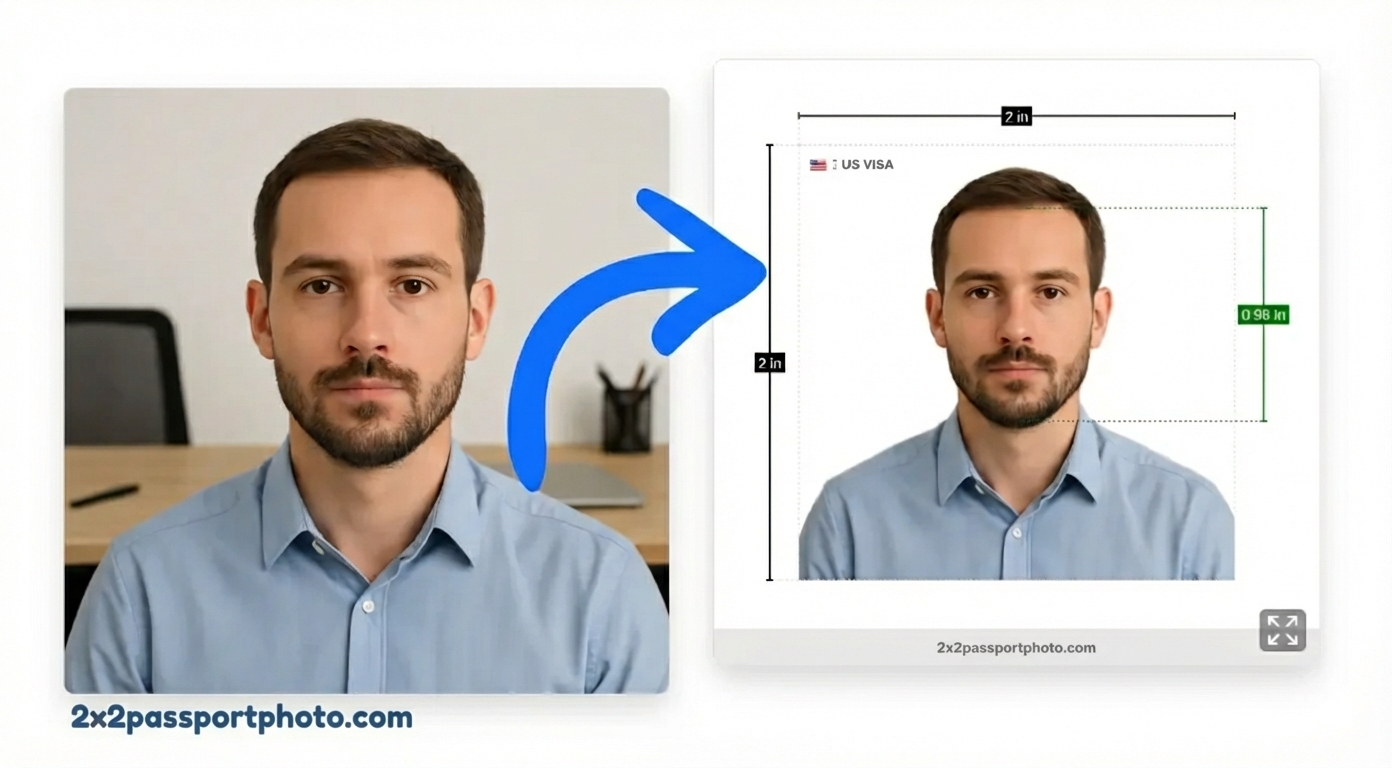
What Exactly Is Allowed
| Expression | Allowed? |
|---|---|
| Neutral face, mouth closed | ✅ Yes |
| Very subtle natural relaxed face | ✅ Usually |
| Small closed-mouth smile | ⚠️ Borderline — depends on reviewer |
| Open-mouth smile showing teeth | ❌ No |
| Big smile that squints the eyes | ❌ No |
| Frowning or sad expression | ❌ No |
| Raised eyebrows, surprised look | ❌ No |
Common Mistakes
- "Cheese" smile — the instinct to smile when a camera appears is strong. Consciously relax your face before the photo is taken.
- Squinting — even slight squinting (caused by smiling or bright light) can cause rejection
- Raised cheeks — even without a visible smile, raised cheeks from a suppressed smile change facial geometry
How to Get the Right Expression
- Look at yourself in a mirror and consciously relax every muscle in your face
- Take a slow breath out, then take the photo
- Imagine you are sitting at your desk, not posing for a photo
- If using our online tool, the compliance check will flag expression issues